Initiation
Initiation is a rite of passage marking entrance or acceptance into a group or society. It could also be a formal admission to adulthood in a community or one of its formal components. In an extended sense it can also signify a transformation in which the initiate is 'reborn' into a new role. Examples of initiation ceremonies might include Hindu diksha, Christian baptism or confirmation, Jewish bar or bat mitzvah, acceptance into a fraternal organization, secret society or religious order, or graduation from school or recruit training. A person taking the initiation ceremony in traditional rites, such as those depicted in these pictures, is called an initiate.

Confirmation
In Christianity, Confirmation is seen as the sealing of the covenant created in Holy Baptism. In some denominations, Confirmation also bestows full membership in a local congregation upon the recipient. In others, such as the Roman Catholic Church, Confirmation "renders the bond with the Church more perfect", because, while a baptized person is already a member, "reception of the sacrament of Confirmation is necessary for the completion of baptismal grace".
Roman Catholics, Eastern Orthodox, Oriental Orthodox Churches, and many Anglicans view Confirmation as a sacrament. In the East it is conferred immediately after baptism. In the West, this practice is followed when adults are baptized, but in the case of infants not in danger of death it is administered, ordinarily by a bishop, only when the child reaches the age of reason or early adolescence. Among those Catholics who practice teen-aged Confirmation, the practice may be perceived, secondarily, as a "coming of age" rite.


Frances Hodgson Burnett
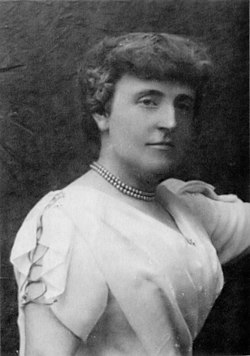
Frances Eliza Hodgson Burnett (24 November 1849 – 29 October 1924) was an English-American novelist and playwright. She is best known for the three children's novels Little Lord Fauntleroy (published in 1885–1886), A Little Princess (1905), and The Secret Garden (1911).
Frances Eliza Hodgson was born in Cheetham, England. After her father died in 1852, the family fell on straitened circumstances and in 1865 immigrated to the United States, settling near Knoxville, Tennessee. There Frances began writing to help earn money for the family, publishing stories in magazines from the age of 19. In 1870, her mother died, and in 1872 Frances married Swan Burnett, who became a medical doctor. The Burnetts lived for two years in Paris, where their two sons were born, before returning to the United States to live in Washington, D.C., Burnett then began to write novels, the first of which (That Lass o' Lowrie's), was published to good reviews. Little Lord Fauntleroy was published in 1886 and made her a popular writer of children's fiction, although her romantic adult novels written in the 1890s were also popular. She wrote and helped to produce stage versions of Little Lord Fauntleroy and A Little Princess.
Adolescence
Adolescence (from Latin adolescere, meaning "to grow up")is a transitional stage of physical and psychological development that generally occurs during the period from puberty to legal adulthood (age of majority). Adolescence is usually associated with the teenage years,but its physical, psychological or cultural expressions may begin earlier and end later. For example, puberty now typically begins during preadolescence, particularly in females.Physical growth (particularly in males), and cognitive development can extend into the early twenties. Thus age provides only a rough marker of adolescence, and scholars have found it difficult to agree upon a precise definition of adolescence.


Doubting Thomas
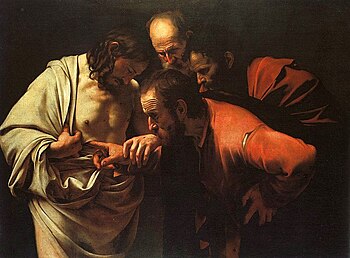
A doubting Thomas is a skeptic who refuses to believe without direct personal experience—a reference to the Apostle Thomas, who refused to believe that the resurrected Jesus had appeared to the ten other apostles, until he could see and feel the wounds received by Jesus on the cross.
In art, the episode (formally called the Incredulity of Thomas) has been frequently depicted since at least the 5th century, with its depiction reflecting a range of theological interpretations.
Picaresque novel
The picaresque novel (Spanish: "picaresca," from "pícaro," for "rogue" or "rascal") is a genre of prose fiction that depicts the adventures of a roguish hero/heroine of low social class who lives by his or her wits in a corrupt society. Picaresque novels typically adopt a realistic style, with elements of comedy and satire. This style of novel originated in 16th-century Spain and flourished throughout Europe in the 17th and 18th centuries. It continues to influence modern literature.
According to the traditional view of Thrall and Hibbard (first published in 1936), seven qualities distinguish the picaresque novel or narrative form, all or some of which an author may employ for effect:
- A picaresque narrative is usually written in first person as an autobiographical account.
- The main character is often of low character or social class. He or she gets by with wit and rarely deigns to hold a job.
- There is no plot. The story is told in a series of loosely connected adventures or episodes.
- There is little if any character development in the main character. Once a picaro, always a picaro. His or her circumstances may change but they rarely result in a change of heart.
- The picaro's story is told with a plainness of language or realism.
- Satire is sometimes a prominent element.
- The behavior of a picaresque hero or heroine stops just short of criminality. Carefree or immoral rascality positions the picaresque hero as a sympathetic outsider, untouched by the false rules of society.

Don Quixote
Don Quixote (/ˌdɒn kiːˈhoʊti/ or /ˌdɒn ˈkwɪksoʊt/;Spanish: [doŋ kiˈxote] ( listen), formerly [doŋ kiˈʃote]),[citation needed] fully titled The Ingenious Gentleman Don Quixote of La Mancha (Spanish: El ingenioso hidalgo don Quijote de la Mancha [el iŋxeˈnjoso iˈðalɣo ðoŋ kiˈxote ðe la ˈmantʃa]), is a Spanish novel by Miguel de Cervantes Saavedra. Published in two volumes, in 1605 and 1615, Don Quixote is considered the most influential work of literature from the Spanish Golden Age and the entire Spanish literary canon. As a founding work of modern Western literature and one of the earliest canonical novels, it regularly appears high on lists of the greatest works of fiction ever published, such as the Bokklubben World Library collection that cites Don Quixote as authors' choice for the "best literary work ever written".
 listen), formerly [doŋ kiˈʃote]),[citation needed] fully titled The Ingenious Gentleman Don Quixote of La Mancha (Spanish: El ingenioso hidalgo don Quijote de la Mancha [el iŋxeˈnjoso iˈðalɣo ðoŋ kiˈxote ðe la ˈmantʃa]), is a Spanish novel by Miguel de Cervantes Saavedra. Published in two volumes, in 1605 and 1615, Don Quixote is considered the most influential work of literature from the Spanish Golden Age and the entire Spanish literary canon. As a founding work of modern Western literature and one of the earliest canonical novels, it regularly appears high on lists of the greatest works of fiction ever published, such as the Bokklubben World Library collection that cites Don Quixote as authors' choice for the "best literary work ever written".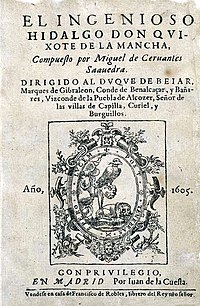
Sancho Panza
Sancho Panza [ˈsantʃo ˈpanθa] is a fictional character in the novel Don Quixote written by Spanish author Don Miguel de Cervantes Saavedra in 1605. Sancho acts as squire to Don Quixote, and provides comments throughout the novel, known as sanchismos, that are a combination of broad humour, ironic Spanish proverbs, and earthy wit. "Panza" in Spanish means "belly" (cf. English "paunch," Italian "pancia", several Italian dialects "panza", Portuguese "pança", French "panse").