Aesop's Fables
Aesop's Fables or the Aesopica is a collection of fables credited to Aesop, a slave and storyteller believed to have lived in ancient Greece between 620 and 564 BCE. Of diverse origins, the stories associated with his name have descended to modern times through a number of sources and continue to be reinterpreted in different verbal registers and in popular as well as artistic media.
The fables originally belonged to the oral tradition and were not collected for some three centuries after Aesop’s death. By that time a variety of other stories, jokes and proverbs were being ascribed to him, although some of that material was from sources earlier than him or came from beyond the Greek cultural sphere. The process of inclusion has continued until the present, with some of the fables unrecorded before the later Middle Ages and others arriving from outside Europe. The process is continuous and new stories are still being added to the Aesop corpus, even when they are demonstrably more recent work and sometimes from known authors.

website: http://www.taleswithmorals.com/


Robert Louis Stevenson
Robert Louis Balfour Stevenson (13 November 1850 – 3 December 1894) was a Scottish novelist, poet, essayist, and travel writer. His most famous works are Treasure Island, Kidnapped, Strange Case of Dr Jekyll and Mr Hyde and A Child's Garden of Verses.
A literary celebrity during his lifetime, Stevenson now ranks as the 26th most translated author in the world. His works have been admired by many other writers, including Jorge Luis Borges, Bertolt Brecht, Marcel Proust, Arthur Conan Doyle, Henry James, Cesare Pavese, Emilio Salgari, Ernest Hemingway, Rudyard Kipling, Jack London, Vladimir Nabokov, J. M. Barrie, and G. K. Chesterton, who said of him that he "seemed to pick the right word up on the point of his pen, like a man playing spillikins".
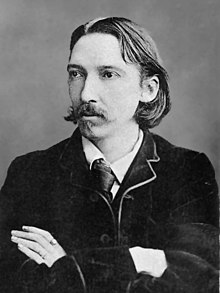
Robert Louis Stevenson's quotes
1.Don't judge each day by the harvest you reap but by the seeds that you plant.

2.It is not so much for its beauty that the forest makes a claim upon men's hearts, as for that subtle something, that quality of air that emanation from old trees, that so wonderfully changes and renews a weary spirit.
3.The Devil, can sometimes do a very gentlemanly thing.
4.All human beings are commingled out of good and evil.

5.I have a little shadow that goes in and out with me, And what can be the use of him is more than I can see.
7.You think dogs will not be in heaven? I tell you, they will be there long before any of us.
8.Man is a creature who lives not upon bread alone, but primarily by catchwords.
9.Every heart that has beat strongly and cheerfully has left a hopeful impulse behind it in the world, and bettered the tradition of mankind.
10.Politics is perhaps the only profession for which no preparation is thought necessary.
Henry John Deutschendorf Jr. (December 31, 1943 – October 12, 1997), known professionally as John Denver, was an American musician, singer-songwriter, record producer, activist, actor, and humanitarian, whose greatest commercial success was as a solo singer, starting in the 1970s. He was one of the most popular acoustic artists of the decade and one of its best-selling artists.By 1974, he was firmly established as America's best-selling performer, and AllMusic has described Denver as "among the most beloved entertainers of his era".After traveling and living in numerous locations while growing up in his military family, Denver began his music career in folk music groups in the late 1960s. Throughout his life, Denver recorded and released approximately 300 songs, about 200 of which he composed, with total record sales of over 33 million.
9.Every heart that has beat strongly and cheerfully has left a hopeful impulse behind it in the world, and bettered the tradition of mankind.
10.Politics is perhaps the only profession for which no preparation is thought necessary.
John Denver
Henry John Deutschendorf Jr. (December 31, 1943 – October 12, 1997), known professionally as John Denver, was an American musician, singer-songwriter, record producer, activist, actor, and humanitarian, whose greatest commercial success was as a solo singer, starting in the 1970s. He was one of the most popular acoustic artists of the decade and one of its best-selling artists.By 1974, he was firmly established as America's best-selling performer, and AllMusic has described Denver as "among the most beloved entertainers of his era".After traveling and living in numerous locations while growing up in his military family, Denver began his music career in folk music groups in the late 1960s. Throughout his life, Denver recorded and released approximately 300 songs, about 200 of which he composed, with total record sales of over 33 million.
Today-lyrics
[Chorus:]
Today, while the blossoms still cling to the vine
I'll taste your strawberries, I'll drink your sweet wine
A million tomorrows shall all pass away
'Ere I forget all the joy that is mine, today
I'll taste your strawberries, I'll drink your sweet wine
A million tomorrows shall all pass away
'Ere I forget all the joy that is mine, today
I'll be a dandy, and I'll be a rover
You'll know who I am by the songs that I sing
I'll feast at your table, I'll sleep in your clover
Who cares what the morrow shall bring
You'll know who I am by the songs that I sing
I'll feast at your table, I'll sleep in your clover
Who cares what the morrow shall bring
Today, while the blossoms still cling to the vine
I'll taste your strawberries, I'll drink your sweet wine
A million tomorrows shall all pass away
'Ere I forget all the joy that is mine, today
I'll taste your strawberries, I'll drink your sweet wine
A million tomorrows shall all pass away
'Ere I forget all the joy that is mine, today
I can't be contented with yesterday's glory
I can't live on promises winter to spring
Today is my moment, now is my story
I'll laugh and I'll cry and I'll sing
I can't live on promises winter to spring
Today is my moment, now is my story
I'll laugh and I'll cry and I'll sing
Today, while the blossoms still cling to the vine
I'll taste your strawberries, I'll drink your sweet wine
A million tomorrows shall all pass away
'Ere I forget all the joy that is mine, today
I'll taste your strawberries, I'll drink your sweet wine
A million tomorrows shall all pass away
'Ere I forget all the joy that is mine, today
Today, while the blossoms still cling to the vine
I'll taste your strawberries, I'll drink your sweet wine
A million tomorrows shall all pass away
'Ere I forget all the joy that is mine, today
I'll taste your strawberries, I'll drink your sweet wine
A million tomorrows shall all pass away
'Ere I forget all the joy that is mine, today
website: https://www.youtube.com/watch?v=uBGjZAYcJqc
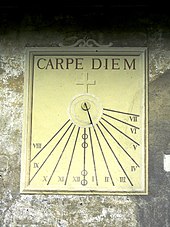
Carpe diem
Carpe diem is a Latin aphorism, usually translated "seize the day", taken from book 1 of the Roman poet Horace's work Odes (23 BC).
Bildungsroman
In literary criticism, a Bildungsroman (German pronunciation: [ˈbɪldʊŋs.ʁoˌmaːn]; German: "novel of formation, education, culture"), novel of formation, novel of education,or coming-of-age story (though it may also be known as a subset of the coming-of-age story) is a literary genre that focuses on the psychological and moral growth of the protagonist from youth to adulthood (coming of age), in which character change is extremely important.

Florence Cathedral
The Dome of Florence Cathedral (Italian pronunciation: [katteˈdraːle di ˈsanta maˈriːa del ˈfjoːre]; in English "Cathedral of Saint Mary of the Flowers") is the main church of Florence, Italy. Il Duomo di Firenze, as it is ordinarily called, was begun in 1296 in the Gothic style with the design of Arnolfo di Cambio and completed structurally in 1436 with the dome engineered by Filippo Brunelleschi.[1]The exterior of the basilica is faced with polychrome marble panels in various shades of green and pink bordered by white and has an elaborate 19th-century Gothic Revival façade by Emilio De Fabris.
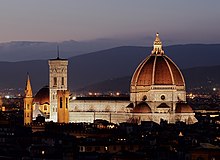

Inside Florence's Cathedral, the Duomo
website: https://www.visitflorence.com/florence-churches/duomo.html
Didacticism
Didacticism is a philosophy that emphasizes instructional and informative qualities in literature and other types of art.

Paparazzi
Paparazzi (US /ˌpɑːpəˈrɑːtsi/, UK /ˌpæpəˈrætsi/; Italian: [papaˈrattsi]; singular: masculine paparazzo or feminine paparazza) are independent photographers who take pictures of athletes, entertainers, politicians, and other celebrities, typically while going about their usual life routines.
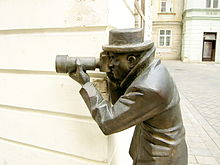
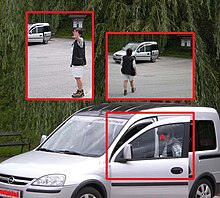

Lady GaGa- Paparazzi
website: https://www.youtube.com/watch?v=d2smz_1L2_0
We are the crowd
We're c-coming out
Got my flash on it's true
Need that picture of you
It's so magical
We'd be so fantastico
Leather and jeans
Garage glamorous
Not sure what it means
But this photo of us
It don't have a price
Ready for those flashing lights
'Cause you know that baby I
I'm your biggest fan
I'll follow you until you love me
Papa-paparazzi
Baby there's no other superstar
You know that I'll be
Papa-paparazzi
Promise I'll be kind
But I won't stop until that boy is mine
Baby you'll be famous
Chase you down until you love me
Papa-paparazzi
I'll be your girl
Backstage at your show
Velvet ropes and guitars
Yeah cause you'll know
I'm staring between the sets
Eyeliner and cigarettes
Shadow is burnt
Yellow dance and return
My lashes are dry
Purple teardrops I cry
We're c-coming out
Got my flash on it's true
Need that picture of you
It's so magical
We'd be so fantastico
Leather and jeans
Garage glamorous
Not sure what it means
But this photo of us
It don't have a price
Ready for those flashing lights
'Cause you know that baby I
I'm your biggest fan
I'll follow you until you love me
Papa-paparazzi
Baby there's no other superstar
You know that I'll be
Papa-paparazzi
Promise I'll be kind
But I won't stop until that boy is mine
Baby you'll be famous
Chase you down until you love me
Papa-paparazzi
I'll be your girl
Backstage at your show
Velvet ropes and guitars
Yeah cause you'll know
I'm staring between the sets
Eyeliner and cigarettes
Shadow is burnt
Yellow dance and return
My lashes are dry
Purple teardrops I cry
Roman Holiday
Roman Holiday is a 1953 American romantic comedy film directed and produced by William Wyler. It stars Gregory Peck as a reporter and Audrey Hepburn as a royal princess out to see Rome on her own. Hepburn won an Academy Award for Best Actress for her performance; the screenplay and costume design also won.
It was written by John Dighton and Dalton Trumbo, though with Trumbo on the Hollywood blacklist, he did not receive a credit; instead, Ian McLellan Hunter fronted for him. Trumbo's credit was reinstated when the film was released on DVD in 2003. On December 19, 2011, full credit for Trumbo's work was restored. Blacklisted director Bernard Vorhaus worked on the film as an assistant director under a pseudonym.


Gothic architecture
Gothic architecture is a style of architecture that flourished in Europe during the high and late medieval period. It evolved from Romanesque architecture and was succeeded by Renaissance architecture. Originating in 12th-century France and lasting into the 16th century, Gothic architecture was known during the period as Opus Francigenum ("French work") with the term Gothic first appearing during the later part of the Renaissance. Its characteristics include the pointed arch, the ribbed vault (which evolved from the joint vaulting of romanesque architecture) and the flying buttress. Gothic architecture is most familiar as the architecture of many of the great cathedrals, abbeys and churches of Europe. It is also the architecture of many castles, palaces, town halls, guild halls, universities and to a less prominent extent, private dwellings, such as dorms and rooms.


Basilica of St Denis
The Basilica of Saint Denis (French: known as Basilique royale de Saint-Denis, or simply Basilique Saint-Denis) is a large medieval abbey church in the city of Saint-Denis, now a northern suburb of Paris. The building is of unique importance historically and architecturally as its choir, completed in 1144, shows the first use of all of the elements of Gothic architecture.
The site originated as a Gallo-Roman cemetery in late Roman times. The archeological remains still lie beneath the cathedral; the people buried there seem to have had a faith that was a mix of Christian and pre-Christian beliefs and practices. Around 475 St. Genevieve purchased some land and built Saint-Denys de la Chapelle. In 636 on the orders of Dagobert I the relics of Saint Denis, a patron saint of France, were reinterred in the basilica. The relics of St-Denis, which had been transferred to the parish church of the town in 1795, were brought back again to the abbey in 1819.

Cologne Cathedral
Cologne Cathedral (German: Kölner Dom, officially Hohe Domkirche Sankt Petrus, Latin: Ecclesia Cathedralis Sanctorum Petri, English: High Cathedral of Saint Peter) is a Roman Catholic cathedral in Cologne, Germany. It is the seat of the Archbishop of Cologne and of the administration of the Archdiocese of Cologne. It is a renowned monument of German Catholicism and Gothic architecture and was declared a World Heritage Site in 1996.It is Germany's most visited landmark, attracting an average of 20,000 people a day and currently the tallest twin-spired church at 157 m (515 ft) tall.


沒有留言:
張貼留言